
The Real Difference Between Luck and Skill in Casino Games
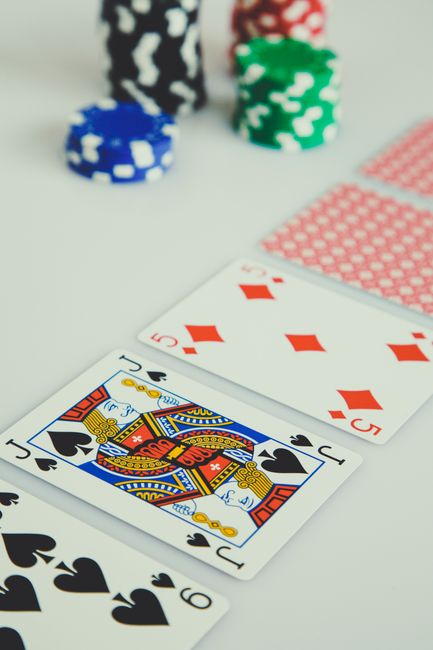
Slot machines have a return-to-player rate of 96%. Blackjack has a house edge as low as 0.5% with basic strategy. Poker has no house edge at all, only a rake. Those three numbers tell you almost everything you need to know about where luck ends and skill begins in a casino — but most players still walk in with the wrong mental model.
I've spent years watching friends lose money on games they thought they could beat and win money on games they thought were pure chance. The truth is messier than the marketing on either side. Let's break it down properly.
The House Edge Is Not a Suggestion
Every casino game has a mathematical edge baked into its rules. That edge is the casino's long-term profit margin, and it doesn't care about your hot streak, your lucky shirt, or the fact that you "feel it" tonight.
Here's a rough comparison worth memorizing:
- Blackjack (basic strategy): 0.5% to 1% house edge
- Baccarat (banker bet): about 1.06%
- Craps (pass line): about 1.4%
- European roulette: 2.7%
- American roulette: 5.26% (the double zero is a tax)
- Slots: 2% to 15%, depending on the machine
- Keno: often 25% or higher
That last one stings. Keno is one of the worst bets on the floor, yet it's often the most crowded. Why? Because it feels like a lottery, and lotteries are psychologically seductive. The numbers, however, don't lie.
Skill Actually Matters in Three Places
If you want to reduce the casino's edge against you, you need to play games where your decisions change the math. There are really only three categories where this is true.
1. Blackjack
Card counting works. It always has. The catch is that modern casinos use six- or eight-deck shoes, frequent shuffling, and continuous shuffling machines that erase the advantage before it builds. A skilled counter might push a 0.5% edge to 1% or 2% — respectable, but not enough to survive the variance on a single weekend. You can read more about this at FAFA828.
2. Poker
Poker is the one game where you're not playing against the house, you're playing against other people. The casino takes a rake — typically 5% capped at $5 or $6 per pot in low-stakes games — but the rest of the money moves between players based on skill. This is why professional poker exists and professional slot playing doesn't.
3. Sports Betting and DFS
If you genuinely know more than the market, the bookmaker posts a line and you can beat it. It's hard. The vig is usually 4% to 5% on a standard -110 line, meaning you need to win roughly 52.4% of your bets just to break even. Most people don't.
Slots: Where Luck Is the Entire Game
Slots are the casino's cash cow for a reason. There is no decision that changes the outcome. Pull the lever, tap the button, whatever — the RNG doesn't care.
What you can control is which machine you sit at. Volatility matters more than most players realize:
- Low volatility — frequent small wins, slow bleed, good for stretching a bankroll
- Medium volatility — the balance most casual players prefer
- High volatility — rare but massive payouts; you can lose 300 spins before anything hits
A 96% RTP slot with high volatility will feel brutal for an hour and then drop a 500x win. A 94% RTP slot with low volatility will feel gentle and still take your money at a steady pace. Neither is "better" — it depends on whether you're there for entertainment or for a shot at a big score.
Betting Systems Don't Beat Math
You've heard of the Martingale. Double your bet after every loss, and eventually you'll win back everything plus one unit. Beautiful on paper. Fatal in practice.
Here's the problem in concrete terms. Start at $10. Lose. Bet $20. Lose. $40. $80. $160. $320. $640. You've now lost $1,270 chasing a $10 profit. If the table maximum is $500, the system collapses entirely. And even without limits, you need an infinite bankroll and infinite time — neither of which exists.
Other systems like Fibonacci, D'Alembert, and Labouchere have the same flaw. They redistribute risk. They don't reduce it.
Practical Rules That Actually Help
None of this is meant to be depressing. It's meant to be useful. If you accept the math, you can play smarter:
- Set a session budget before you sit down and treat it as spent money, not money you're trying to win back.
- Play games with the lowest house edge if you care about longevity — blackjack, baccarat, craps, video poker.
- Learn basic strategy for blackjack. It's a chart, not a secret. It cuts the house edge by roughly half versus playing by gut.
- Treat slots as entertainment, not investment. Pick a volatility you enjoy and stick to it.
- Never chase losses on a sportsbook after a bad beat. The line is still the line.
- Take the comps seriously. Free rooms, meals, and match play can be worth hundreds of dollars on a weekend — that's real value the casino hands you in exchange for your action.
Why This Matters More Than Ever
Online casinos and sportsbooks have made gambling frictionless. There's no drive to the strip, no waiting for a table, no awkward walk of shame to the ATM. That convenience is exactly why bankroll discipline matters more in 2024 than it did in 1994.
The games haven't changed. The math hasn't changed. What's changed is how easy it is to play badly for a very long time without noticing.
Luck and skill aren't opposites in a casino. They're layers. Skill gets you to the right table and keeps you there. Luck decides what happens next. The players who last are the ones who understand which layer they're actually operating in — and don't confuse the two when the cards turn cold.


If your laptop only charges at certain angles, the fault may be the cable, port or power settings. Work through each possibility carefully.
A failing drive can lose data quickly. Stop writing new files, check connections and use careful copying methods before seeking specialist help.
Router placement, channel choice and firmware updates can improve wireless reach. Test each change to find the best setup for your home.
Suspicious messages often use urgent language, odd sender addresses and unexpected attachments. Check links by hovering and verify requests separately.