
Inside the Mind of a Winning Poker Player: Lessons for Slots and Sports Betting
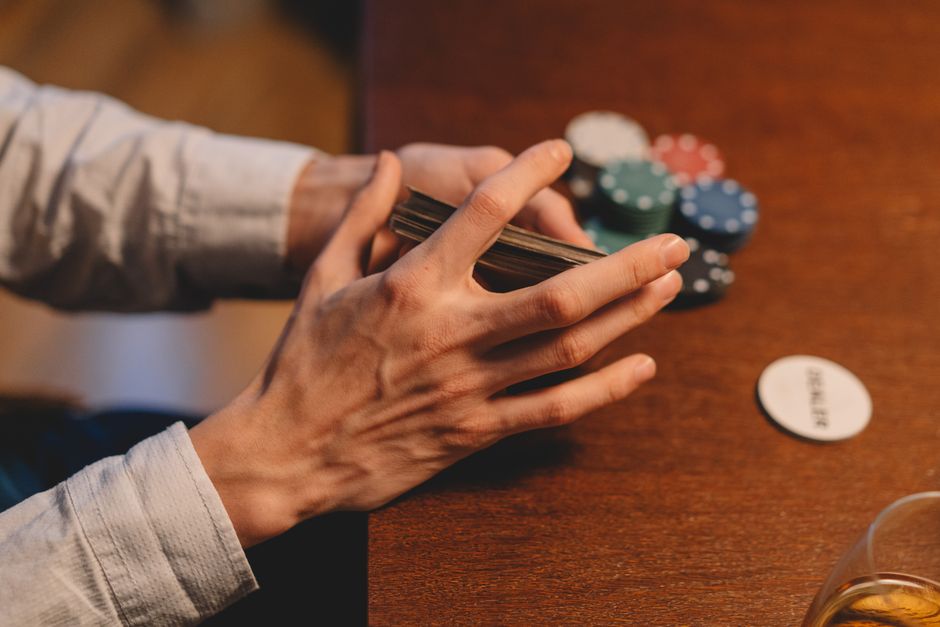
Most people think professional gamblers have a secret system. A spreadsheet, a formula, a guy on the inside. The truth is far less cinematic and far more useful. When you watch a successful poker pro navigate a session, you're not watching someone predict cards. You're watching someone manage uncertainty, control their emotions, and think in probabilities. Those are skills that transfer directly to slot machines, sports betting, and really any form of iGaming you can name.
Let's pull back the curtain on how winning players actually think — and how you can borrow those mental habits next time you log in.
1. Understand the Difference Between Variance and Luck
Ask a winning poker player about a losing session, and they rarely say "I was unlucky." They say things like "I got it in good and the river punished me, but the decision was correct." That distinction — between a bad result and a bad decision — is the emotional backbone of every profitable gambler.
In slots, this matters even more. Slot machines are pure variance and pure house edge. There is no decision tree that changes the return-to-player percentage (RTP). But there is a decision about which machines you play. A 94% RTP slot will, over a million spins, extract roughly 6% of all money wagered. A 96.5% RTP slot extracts 3.5%. Over a long session, that difference eats your bankroll alive.
- Check the RTP before you spin. Most jurisdictions and many providers publish it. Anything below 95% is generally a poor long-term choice.
- Avoid chasing jackpots with terrible base RTP. Some progressive jackpot slots sit as low as 87-90% RTP to fund the prize pool.
- Remember variance: high-volatility slots can go 300 spins without a meaningful hit. That's not a glitch — it's the design.
Poker players internalize this. If you're a 60/40 favorite and lose, your play was still right. Apply the same logic to your game selection.
2. Bankroll Management Is the Only Real Edge at a Casino
You can't control the cards or the reels. You can absolutely control how much money you're willing to expose to them. This is the single most respected principle in professional poker, and it's the one most casual iGaming players ignore.
Here's what a disciplined bankroll structure looks like in practice: SHBET offers a practical breakdown of the topic.
- Define your total gambling bankroll. Money you can lose without affecting rent, bills, or relationships.
- Set a session cap. A common rule in poker is 5% of your bankroll per session for cash games.
- Set a stop-loss. If you're down 30% of your bankroll on a bad night, walk away. Not tomorrow, not after one more spin. Now.
- Set a win-stop too. It sounds counterintuitive, but locking in a good session protects you from giving it all back — a phenomenon every poker player knows.
Most sports bettors use a flat unit system: 1-2% of bankroll per bet, usually on a 1-3 unit scale. The math is boring. The math also works. Many readers start with SH BET when comparing options.
2 (continued). The Psychological Trap of the "Almost" Win
Slot designers and casino floor managers have known for decades that near-misses — two jackpot symbols plus a blank — trigger the same dopamine response as an actual win. Poker's version is the bad beat.
The skilled response is the same in both games: recognize the manipulation, name it, and don't chase it. If you feel a physical urge to "get it back" after a tough loss, that's your signal to log out. Revenge betting has probably cost more money than every bad equity decision in poker history combined.
3. Game Selection Matters More Than You Think
Everyone in poker knows the truest sentence ever spoken about the game: if you can't spot the sucker at the table, you're the sucker. The winning player's first instinct isn't to play better — it's to play softer tables.
The equivalent in modern iGaming:
- Sports betting: line-shopping between books can swing your expected value by 2-4% per bet. That's enormous over hundreds of bets.
- Poker: sites with less traffic often mean softer opponents. High-traffic sites mean better regs and tougher tables.
- Slots: online versions typically run 2-5% higher RTP than their live casino counterparts. Physical slots sit around 88-92%; online often runs 95-97%.
- Promotions: reload bonuses, free spins, and rakeback are often the largest single source of a regular player's profit. If you ignore bonuses, you're leaving real money on the table.
This is where amateur players lose most quietly. They obsess over strategy while ignoring the soft factors that actually swing the math in their favor.
4. Tilt Is the Silent Bankroll Killer
"Tilt" is poker slang for the emotional spiral after a bad hand. You start making plays you'd never normally make — calling with junk, raising with air, rebuying one too many times. Slot players and sports bettors do the exact same thing, just with different terminology.
Signs you're on tilt, beyond obvious frustration:
- Increasing bet size without a reason.
- Playing games you don't normally play "just this once."
- Hiding the session from a partner or checking your balance compulsively.
- Betting on events you have no knowledge base about.
Serious players use hard rules to prevent tilt. Some quit after three bad beats in a row. Some keep a physical notepad and write down every bet. Some set a timer. The method matters less than the rule — the point is to take the decision out of your hands when you're not thinking clearly.
5. Tools, Data, and the Modern Edge
Today's smart gambler lives in a spreadsheet. If you're playing any serious volume, tracking is non-negotiable.
- Track every session: date, game, stake size, result, and mood/notes.
- Review monthly. Are you actually profitable in a given game, or do you just remember the wins?
- Check your ROI or EV-bet ratio. In sports, a 3-5% ROI is genuinely good. In poker, 5bb/100 is a serious winrate. In slots, there is no long-term edge — the goal is strictly entertainment and managing losses.
- Use responsible gambling tools offered by reputable operators: deposit limits, session limits, and self-exclusion. These exist for a reason and they work.
The old-timers had handwritten notebooks. You have a browser and free trackers. Use them.
6. What Betting and Poker Players Actually Know That Every iGaming Fan Should
You will lose. Not every time, but over enough hands, spins, and bets, the house edge will grind you unless you're playing poker against weaker opponents or sports betting with genuine analytical edge. The pros accept this and plan around it. They don't try to beat variance on a Tuesday night. They try to stay profitable across a year, a career, or a hobby lifetime.
That shift in framing is the single biggest thing you can adopt. Deposit only what you'd spend on a weekend out. Treat wins as events, not expectations. Take breaks before frustration sets in, not after. And when you hit a session you're proud of, walk away with it — that's the move that separates the long-term survivors from the cautionary tales.
Winning is less about a secret system and more about boring discipline. Ironically, that's the most exciting insight in iGaming.


If your laptop only charges at certain angles, the fault may be the cable, port or power settings. Work through each possibility carefully.
A failing drive can lose data quickly. Stop writing new files, check connections and use careful copying methods before seeking specialist help.
Router placement, channel choice and firmware updates can improve wireless reach. Test each change to find the best setup for your home.
Suspicious messages often use urgent language, odd sender addresses and unexpected attachments. Check links by hovering and verify requests separately.